Renovation guide
What Is a Gut Renovation NYC? Types, Pros & Cons
What is a gut renovation NYC homeowners should know — vs cosmetic work, timelines, and when a full gut makes sense in Manhattan.
Written by Chris Baran, Founder & General Contractor, Multi Art Renovations (NYC HIC #1305505-DCA).
On this page
Summary: A gut renovation in NYC strips an apartment or townhouse interior to bare structure, replaces mechanical systems, and rebuilds layout, kitchen, baths, and finishes in one coordinated phase. This guide explains how gut work differs from cosmetic, functional, and structural renovations — and when a full gut makes sense for Manhattan co-ops, condos, and townhouses. Multi Art Renovations serves Manhattan only; Chris Baran leads in-house plumbers, electricians, and craftsmen from board submission through walkthrough.
You are comparing renovation quotes — or walking a pre-war co-op that still has original plumbing behind the walls — and someone mentions a gut renovation. In New York City, that phrase gets used loosely. Sometimes it means new cabinets and paint. Other times it means stripping the unit to studs, replacing every pipe and wire, and rebuilding the layout from scratch. Those are not the same project — and the budget, timeline, and board paperwork are worlds apart.
If you own or are buying in Manhattan, choosing the right renovation type early protects your investment and your sanity. A cosmetic refresh cannot fix failing electrical. A kitchen-only remodel may uncover conditions that force a second phase six months later. This guide focuses on Manhattan apartments and townhouses — Multi Art Renovations' service area — using NYC Department of Buildings rules that apply citywide. It explains what a full-unit gut renovation means, how it compares to narrower scopes, and how Chris Baran approaches recommendations on every walkthrough.
What is a gut renovation in NYC?
A gut renovation removes existing finishes, fixtures, and non-load-bearing partitions down to bare structure or open studs, then rebuilds plumbing, electrical, HVAC where applicable, layout, kitchen, bathrooms, flooring, doors, and millwork as one integrated scope. Everything behind the walls that affects safety, code compliance, and daily function is addressed — not patched around.
In Manhattan co-ops and condos, gut work is common when you purchase an estate-condition apartment, combine two units, or finally replace systems that have been deferred for decades. The NYC Department of Buildings requires permits for most plumbing, electrical, gas, and structural changes — gut scopes almost always trigger multiple filings in addition to your building's alteration agreement.
Gut renovation is not a weekend DIY project. Buildings require licensed and insured contractors, board-approved scope, floor protection, elevator reservations, and weekday work-hour compliance. Multi Art Renovations manages demolition, rough trades, finish carpentry, inspections, and board close-out under one general contractor contract — one schedule, one point of accountability.
Renovation types · Manhattan
Four renovation types at a glance
| Renovation type | Scope | Typical timeline | Relative investment |
|---|---|---|---|
| Cosmetic updates | Paint, flooring, fixtures, hardware, surface refresh. No plumbing, electrical, or layout changes. | 1–2 months on site | $ |
| Functional renovation | Kitchen and/or bath remodel, or targeted HVAC, electrical, or plumbing within existing layout. | 3–5 months total | $$ |
| Structural improvement | Wall removal or addition, room expansion, layout changes affecting load paths (often paired with finish work). | 5–9 months total | $$$ |
| Full-unit gut renovation | Strip interior to structure or studs, replace systems and finishes throughout the apartment or home. | 5–9+ months construction after board approval | $$$$ |
Timelines are planning benchmarks, not guarantees. Functional and structural rows reflect typical total project length. Full-unit gut construction commonly runs 5–9+ months after board approval and permits — add 1–4+ months (often longer in strict co-ops) for board review and DOB filing before demolition. Cosmetic timelines are on-site work; co-ops and condos may still require board approval before you start.
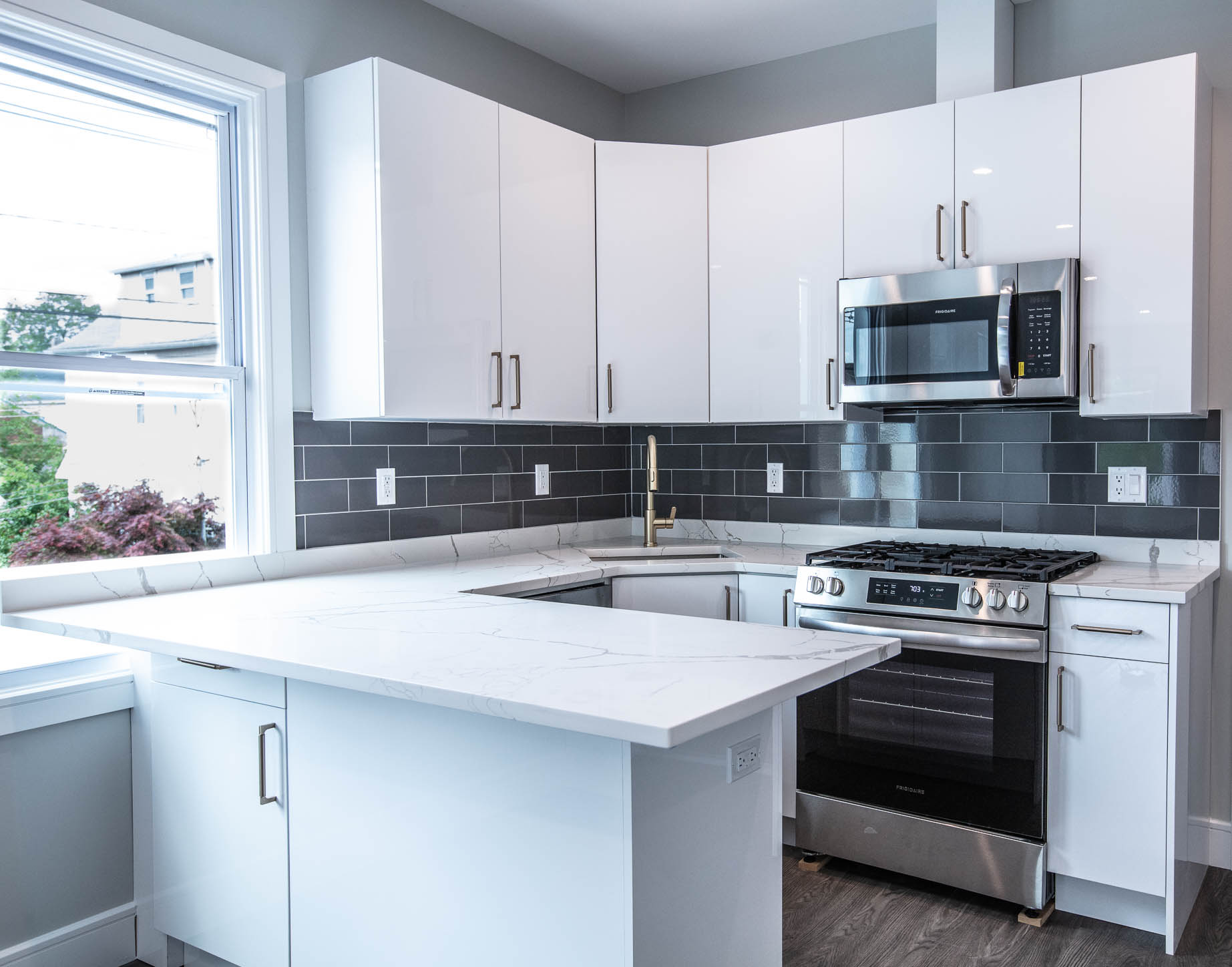
What are the advantages of a gut renovation in Manhattan?
A full-unit gut renovation is often the most direct way to address problems hidden behind existing walls. When systems, layout, and finishes are rebuilt together, you reduce the need to design around outdated plumbing stacks, undersized panels, or failing waterproofing — issues that often resurface during partial Manhattan remodels.
Replacing outdated systems before they fail
Many Manhattan apartments still have aging branch plumbing, electrical panels at capacity, or ventilation that should be upgraded during a major remodel. A full-unit gut replaces those elements while walls are open — before new finishes mask problems that cost more to fix later. In pre-war buildings, cast-iron stacks and plaster walls often require coordination with building staff and adjacent units; addressing that in one scope is usually more efficient than repeated partial openings.
Layout freedom within building rules
Gut scope lets you reconfigure rooms when wet-over-dry rules and engineering allow — open kitchens, primary suites, home offices, or combined living areas that a cosmetic refresh cannot deliver. Moving kitchens and baths still requires board and DOB review, but you are not locked into the prior owner's floor plan.
One construction phase instead of many
Each board submission, protection setup, and elevator reservation carries cost and disruption. Completing systems, kitchen, baths, flooring, and millwork in one gut phase means one alteration cycle for your neighbors and one timeline for your family — not a kitchen project this year and a bath project after the next board election.
Stronger resale story in Manhattan
Buyers and appraisers notice when infrastructure matches the finishes. A gut renovation that documents new plumbing, electrical, waterproofing, and permits closes the gap between a pretty kitchen and a home that passes engineer review. That matters in co-op resales where board packages and alteration history travel with the unit.
Energy efficiency and daily comfort
Insulation improvements where accessible, efficient appliances, LED lighting, and properly sized through-wall or building HVAC can improve comfort — upgrades that are easier to integrate during a gut than after new drywall is installed. Window replacement depends on co-op, condo, or landmark rules and is not always part of scope.
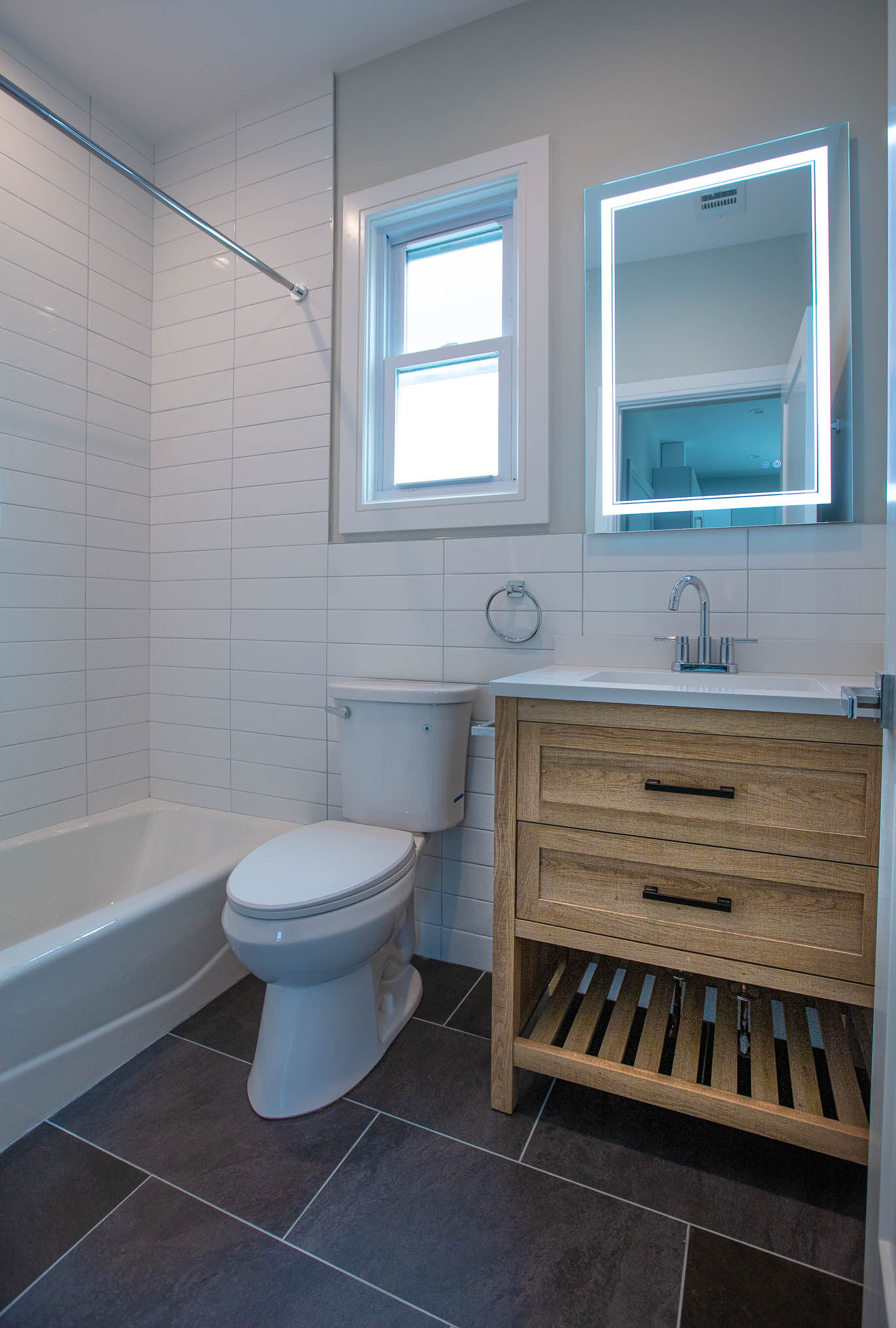
What are the disadvantages of a gut renovation in NYC?
Gut renovations deliver the most complete result — and carry the highest cost, longest timeline, and heaviest regulatory load. Understanding the trade-offs upfront helps you choose gut work for the right reasons, not because a contractor defaulted to maximum scope.
Gut renovation trade-offs
Pros and cons of a gut renovation in NYC
Advantages
Systems match finishes
New plumbing, electrical, and waterproofing sized for how you will actually use the apartment — not layered over 1960s infrastructure.
Layout control
Reconfigure rooms when engineering and wet-over-dry rules allow, instead of designing around the prior owner's floor plan.
Single board cycle
One alteration agreement, one protection plan, and one construction schedule for the full unit.
Documented compliance
Permits, inspections, and close-out paperwork that support resale and co-op transfer packages.
Disadvantages
Higher total investment
Replacing every system and surface costs more than targeted room work — with a higher floor even at modest finish levels.
Longer timeline
Board review, DOB permitting, demolition, rough trades, and finish lead times commonly span many months in Manhattan.
Regulatory complexity
Co-op or condo board approval, DOB filings, and sometimes LPC review must be sequenced before demolition starts.
Disruption during construction
You will not live comfortably in the unit mid-gut. Plan for alternate housing and storage for the full construction window.
Trade-off: a full-unit gut delivers the most complete result; narrower scopes cost less but may leave underlying systems unchanged.
Manhattan GC perspective
Chris Baran reviews every gut scope onsite before recommending full versus partial work. If your electrical panel, branch plumbing, and layout already function for your goals, a targeted kitchen-and-bath renovation may be the smarter path — we will tell you that on the walkthrough.
How do cosmetic, functional, and structural renovations compare?
Not every Manhattan apartment needs a gut. Many homeowners achieve their goals with a narrower scope — as long as they understand what each renovation type can and cannot fix.
Cosmetic updates
Cosmetic work refreshes surfaces: paint, flooring, lighting fixtures, hardware, and cabinetry refacing. The layout stays the same. Plumbing and electrical are not opened. Cosmetic updates are the fastest and least expensive path when the bones and systems are sound — common in recently renovated condos where you want your own aesthetic, not a full rebuild.
Functional renovations
Functional scope targets how specific rooms work — a kitchen remodel, bathroom gut, panel upgrade, or HVAC replacement within the existing footprint. This path works when your goals are bounded and core building systems are acceptable. The risk in older Manhattan buildings is scope creep: opening one wet wall often reveals conditions in adjacent areas that should be addressed in the same phase.
Structural improvements
Structural work changes load paths — removing walls, expanding rooms, or combining spaces with engineer-stamped drawings. It can transform how an apartment flows without replacing every finish in the unit. Structural improvements still require DOB review and board approval, and they are often combined with gut scope when systems behind those walls are also outdated.
Which renovation type fits your Manhattan apartment?
Start with building condition, not your Pinterest board. The renovation type that makes sense is determined first by what the apartment actually needs — then by what you want to achieve.
Decision framework
Which renovation type is right for your NYC property?
| Your situation | Recommended approach |
|---|---|
| Recently updated unit with modern systems and a layout that works | Cosmetic updates — refresh paint, flooring, fixtures, and hardware. |
| Kitchen or bath no longer functions, but systems and layout elsewhere are fine | Functional renovation — targeted kitchen and/or bath remodel within existing locations. |
| Layout no longer fits your household; walls need to move | Structural improvements — engineer review, DOB filing, then coordinated finish work. |
| Pre-war co-op with original electrical, plumbing, and estate-condition finishes | Gut renovation — layering finishes over failing systems creates repeat projects within years. |
| Combining two adjacent apartments or major reconfiguration | Gut renovation — partial paths rarely produce cohesive systems and layout across the new footprint. |
| Fixer-upper purchase where you want full control of every decision | Gut renovation — estate condition is the cleanest starting point for unified planning. |
An onsite walkthrough with a Manhattan GC who knows your building type is the most reliable way to validate this matrix before you commit to scope.
What do gut renovations cost and how long do they take in NYC?
Full-unit gut renovation construction in Manhattan commonly runs five to nine months after board approval and active permits — longer for large units, layout changes, pre-war abatement, or long-lead custom finishes. Before demolition, board or management review often takes two weeks to three months (sometimes longer), and DOB permit plan review can add weeks to months depending on scope.
Cost & timeline · Manhattan · 2026
Renovation type benchmarks for planning
| Renovation type | Typical Manhattan timeline | Planning notes |
|---|---|---|
| Cosmetic updates | 1–2 months on site | Paint, flooring, fixtures, hardware. Usually no DOB trade permits when plumbing, electrical, and gas stay untouched — board approval may still apply in co-ops and condos. |
| Functional renovation | 3–5 months total | Kitchen and/or bath remodel, or targeted electrical or plumbing within existing layout. A single-room kitchen renovation in a UWS co-op we completed ran approximately four months from board approval through completion. |
| Structural improvement | 5–9 months total | Wall modifications, room expansion, engineer-stamped drawings, DOB review — often combined with kitchen, bath, or finish work. |
| Full-unit gut renovation | 5–9+ months construction after board approval | Systems and finishes throughout the unit. As rough planning estimates only — not quotes — most Manhattan full-unit guts we quote fall in approximately $150,000–$400,000+ before finish-driven upgrades. |
Ranges are planning benchmarks only — not fixed prices. Final cost depends on square footage, building rules, abatement, layout changes, and finish level. Chris Baran provides itemized onsite estimates after reviewing your space and alteration agreement.
We do not publish fixed price lists online. Per-square-foot calculators cannot account for riser layout, wet-over-dry rules, or board soft costs. For line-item scope levels, soft costs, and estimate preparation, see our gut renovation cost & planning guide.
Frequently asked questions about gut renovations in NYC
What is a gut renovation in NYC?
A gut renovation — in the full-unit sense — strips interior finishes and fixtures down to bare structure or open studs, then rebuilds plumbing, electrical, layout, kitchen, bathrooms, flooring, and millwork as one scope. It is different from a room-level gut (for example, a bathroom stripped to studs) or informal use of "gut" to mean new cabinets and paint. In Manhattan co-ops and condos, full-unit guts are common for estate-condition purchases, unit combinations, or apartments where major systems have not been updated in decades.
What is the difference between a gut renovation and a cosmetic renovation?
A cosmetic renovation updates what you see — paint, floors, fixtures, and finishes — without opening walls or replacing plumbing and electrical. A gut renovation removes those surfaces and rebuilds systems, layout, and finishes together. Cosmetic work is faster and less expensive when infrastructure is sound; in older Manhattan apartments, cosmetic-only projects often leave failing systems in place.
When does a kitchen or bath remodel make more sense than a full gut?
When core systems are in acceptable condition and your goals are specific — a new kitchen layout within existing plumbing locations, or one bathroom rebuilt to current waterproofing standards. Targeted work makes sense if an honest pre-demolition assessment shows panels, branch plumbing, and ventilation do not need wholesale replacement. Be realistic about scope creep in pre-war buildings: opening one wet wall frequently reveals adjacent conditions worth fixing in the same phase.
Does a gut renovation increase property value in Manhattan?
Buyers and managing agents often look for alignment between finishes and infrastructure. A documented gut renovation with closed permits and board sign-off can support a co-op resale package. ROI is not automatic — over-improving relative to comparable sales in your building is a real risk. Finishes should match what the building's market supports.
How do permits and board approvals work for a gut renovation?
Most full-unit gut renovations require drawings and trade permits filed with the NYC Department of Buildings when plumbing, electrical, gas, or structural work is involved — scope varies by project. Co-ops and condos require board or management approval before demolition: alteration agreements, insurance certificates, scope narratives, and often architect- or engineer-stamped plans. These steps run in sequence; starting demolition before approvals risks board penalties and DOB stop-work orders. Our NYC renovation permits guide and co-op renovation guide walk through the filing basics.
What is included in a typical Manhattan gut renovation scope?
Under Multi Art Renovations, a full gut typically includes demolition and debris removal per building rules; plumbing and electrical rough-in with panel upgrades where required; kitchen and bathroom build-out; flooring, doors, trim, and paint; permits and inspections; and co-op or condo alteration compliance. Soft costs such as architect fees, abatement, and board deposits are itemized separately in your written estimate.
What renovation type makes sense for a pre-war co-op in Manhattan?
Estate-condition pre-war units with original branch plumbing, insufficient electrical, and decades of deferred maintenance are strong gut candidates — remediation scope is often large enough that a comprehensive approach is more cost-effective than serial partial projects. Pre-war apartments that have been maintained and partially updated may suit selective renovation that preserves original mouldings or flooring while updating specific rooms. The answer starts with condition assessment, not finish preferences.
Can you live in the apartment during a gut renovation?
Practically, no. Gut work shuts down kitchens, baths, and often power or water for extended periods. Dust, noise, and building work-hour rules make the unit uninhabitable for most families. Plan alternate housing for the construction phase and storage for belongings before board-approved demolition dates.
How do you decide which renovation type is right for your property?
Walk the apartment with a contractor who knows Manhattan buildings — not a national averages blog. Chris Baran reviews layout, visible systems, alteration agreement requirements, and your goals onsite, then recommends gut, partial, or phased scope with an itemized estimate. Decisions made on incomplete information are where budgets and timelines fall apart, regardless of renovation type.
Whether you are purchasing a fixer-upper or finally upgrading the home you have lived in for years, matching renovation scope to building reality is the decision that protects your investment. Cosmetic refreshes, functional kitchen-and-bath work, and full gut renovations each have a place in Manhattan — the right choice depends on what is behind your walls, what your board will approve, and what you need the finished apartment to do for your household.
Multi Art Renovations is a Manhattan-only general contractor led by Chris Baran, with in-house plumbers, electricians, and finish carpenters serving co-ops, condos, and townhouses from walkthrough to final punch list. Explore our full home & gut renovation services, review project case studies, or request a free onsite estimate when you are ready to scope your apartment.
Related pages
Continue exploring guides and services linked from this article.
